
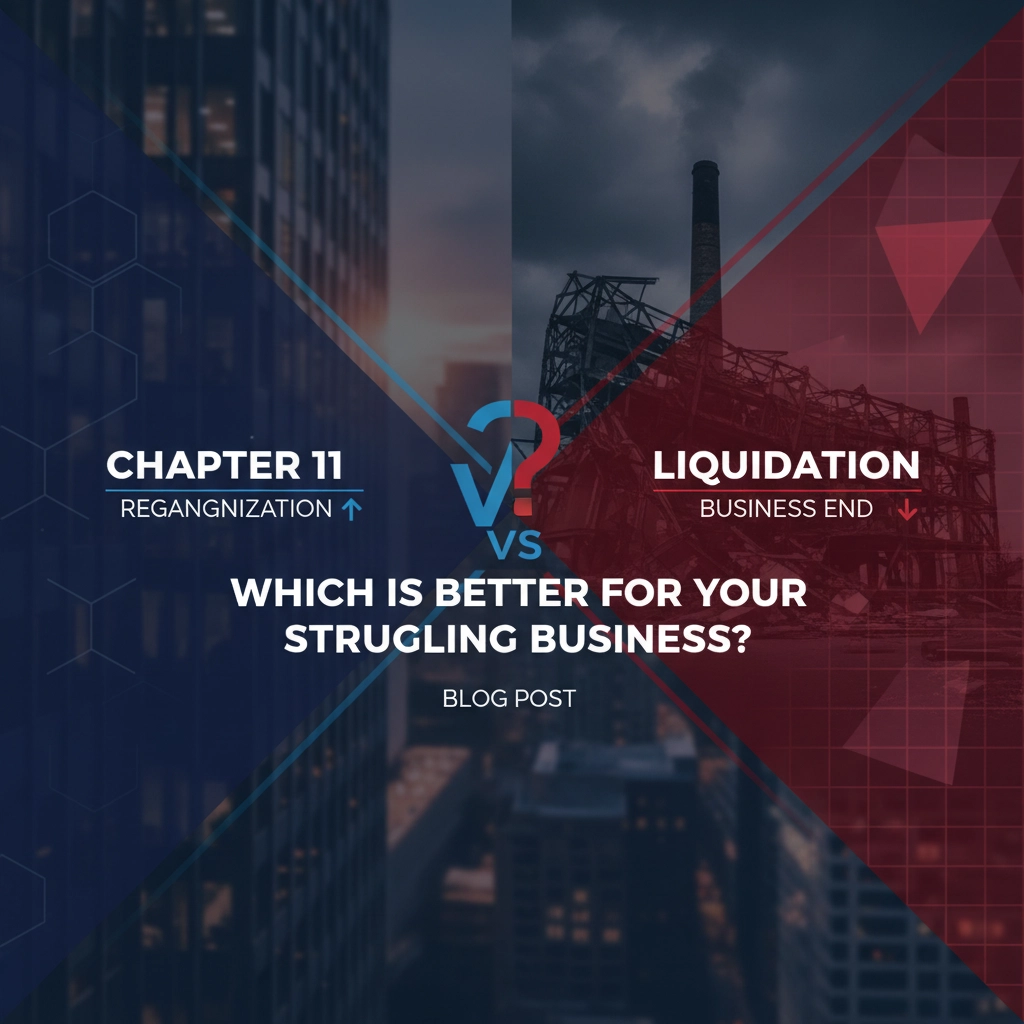
When your business is drowning in debt and cash flow problems are keeping you up at night, you're facing one of the toughest decisions any business owner can make: Should you fight to save your company through Chapter 11 reorganization, or is it time to liquidate and move on?
I've guided hundreds of business owners through this exact crossroads over my career. The choice between Chapter 11 and liquidation isn't just about money. It's about your future, your employees' livelihoods, and whether your business has what it takes to survive and thrive again.
Let me walk you through the real differences between these options and help you make the right call for your situation.
Understanding Your Two Main Paths
Chapter 11 reorganization lets you keep your business running while you restructure debts and operations. You become what's called a "debtor in possession," meaning you maintain control over daily operations while working with the court and creditors to create a recovery plan.
Liquidation means selling your business assets to pay creditors and shutting down operations. You have two liquidation options: Chapter 7, where a court-appointed trustee takes immediate control, or Chapter 11 liquidation, where you retain more control over the asset sale process.

When Chapter 11 Reorganization Makes Sense
Chapter 11 works best when your business problems are fixable. I tell my clients to consider reorganization if their core business model is sound but they're struggling with temporary issues like market downturns, supply chain disruptions, or manageable debt loads.
The biggest advantage of Chapter 11 is the automatic stay. The moment you file, creditor collection actions stop. No more harassing phone calls, no more threats of foreclosure. This breathing room lets you focus on fixing your business instead of fighting off creditors.
You also get incredible negotiating power. Instead of dealing with dozens of creditors separately, Chapter 11 forces everyone to work together on one plan. Even better, if the court approves your reorganization plan, it binds all creditors, even the ones who voted against it.
I've seen businesses emerge from Chapter 11 stronger than before. They shed unprofitable locations, renegotiate supplier contracts, and restructure debt payments to manageable levels. One manufacturing client of mine reduced their monthly debt payments by 60% and kept all 150 employees.
But Chapter 11 isn't cheap or quick. Legal fees, court costs, and professional advisors can easily run into six figures. The process typically takes 12 to 18 months, sometimes longer. You'll need to prove your business can generate enough cash flow to pay restructured debts and operating expenses.
When Liquidation Is the Right Call
Sometimes the kindest thing you can do for yourself and your stakeholders is to liquidate. If your business loses money every month with no realistic path to profitability, continuing operations just digs a deeper hole.
Chapter 7 liquidation is the fastest and cheapest option. A trustee takes over, sells your assets, pays creditors what they can, and closes the business. You lose control completely, but you also walk away from the stress and financial drain.

Chapter 11 liquidation gives you more control over the process. You can negotiate with buyers, time asset sales for maximum value, and manage the shutdown process professionally. This option works well when you have valuable assets but an unsalvageable business model.
I recently helped a restaurant chain choose Chapter 11 liquidation after COVID permanently changed their market. By controlling the process, we maximized real estate values and protected employee severance packages better than Chapter 7 would have allowed.
Key Factors That Drive the Decision
Cash Flow Reality Check
Can your business generate positive cash flow within 12 months? Not just break-even, but actual positive cash flow that covers restructured debt payments. If the answer is no, liquidation is probably your best option.
Market Position
Is your industry growing or declining? Are you losing market share to competitors, or do you have competitive advantages worth preserving? A strong market position supports reorganization efforts.
Asset Values
What are your assets really worth? If your equipment, real estate, or inventory can cover most debts through liquidation, you might prefer that clean exit over years of Chapter 11 uncertainty.
Personal Guarantees
Many business owners personally guarantee business debts. Chapter 11 might help negotiate releases from some guarantees, while liquidation often leaves personal guarantees intact.

The Financial Reality of Each Option
Chapter 11 reorganization typically costs $100,000 to $500,000 in professional fees, depending on business complexity. You'll pay attorneys, accountants, financial advisors, and court fees. But if your business survives and thrives, these costs become a worthwhile investment.
Chapter 7 liquidation costs much less, usually $10,000 to $50,000 in trustee and attorney fees. However, you have no control over asset sales and might receive less value than organized liquidation.
Chapter 11 liquidation falls in between, costing $50,000 to $200,000 but giving you control over maximizing asset values and managing the shutdown process professionally.
Making Your Decision
Here's my framework for this decision:
Choose Chapter 11 reorganization if:
- Your business can show positive cash flow within 12 months
- You have competitive advantages worth preserving
- Your industry outlook is stable or improving
- You can afford 12-18 months of legal and professional fees
- Your debt problems stem from temporary issues, not fundamental business model flaws
Choose liquidation if:
- Your business loses money consistently with no clear path to profitability
- Your industry is in permanent decline
- You lack resources for a lengthy reorganization process
- Personal stress and health concerns outweigh potential business recovery
- Asset values can cover most debts through liquidation sales
Who We Are
At Dan Kost Business Consulting, I've spent over two decades helping business owners navigate their most challenging financial decisions. My team specializes in business restructuring, debt negotiation, and strategic planning for companies in distress.
We've successfully guided hundreds of businesses through Chapter 11 reorganizations, achieving debt reductions averaging 40-60% while preserving jobs and business operations. For clients choosing liquidation, we maximize asset values and minimize personal liability exposure.
Our approach combines deep financial expertise with practical business sense. We don't just crunch numbers – we understand the human side of business distress and work to protect what matters most to you and your stakeholders.

Take Action Now
The worst thing you can do is nothing. Every month you delay addressing financial distress makes your options more limited and expensive.
Start by getting a realistic assessment of your business's financial position and recovery prospects. Gather 24 months of financial statements, accounts payable aging reports, and cash flow projections. This information will be essential for any path forward.
Consider consulting with restructuring professionals early, even before you're certain about filing bankruptcy. We can help you understand your options, negotiate with creditors outside of court, and prepare for potential bankruptcy filing if needed.
Remember, neither Chapter 11 nor liquidation is a failure. Both are legitimate business tools for addressing financial distress. The key is choosing the right tool for your specific situation and acting before your options disappear.
If you're facing this difficult decision, don't go it alone. Contact our team at Dan Kost Business Consulting for a confidential consultation. We'll help you understand your options and develop a strategy that protects your interests and maximizes your chances of a successful outcome.
Your business's future depends on making the right choice now. Let's work together to find your best path forward.